Why I Journal (And Why You Might Not Need To)
I've been journaling for thirty years. Not every day - that's a myth. But consistently enough that I have notebooks stacked in boxes, filled with versions of myself I barely recognize.

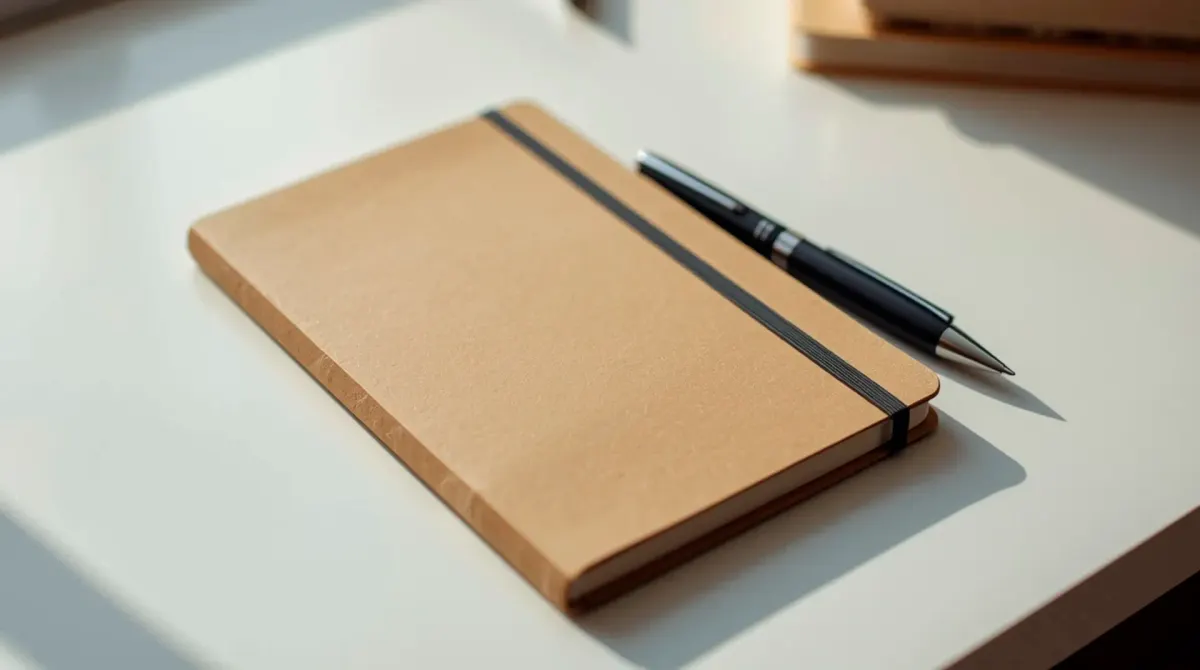
I have boxes. Three of them, stacked in a closet I rarely open. Inside: notebooks. Moleskines, cheap spiral-bounds, a few leather journals someone gave me as gifts. Thirty years of handwriting that gets progressively harder to read.
I've opened those boxes maybe twice in the last decade.
The self-help consensus on journaling is overwhelming. Morning pages. Gratitude lists. Stream of consciousness. Bullet journals. The message is clear: write every day and transformation will follow. And I did write, for thirty years. Not every day - that's a myth I stopped believing around year five - but consistently enough that the evidence fills three cardboard boxes.
I'll say the quiet part: most of it was useless. Not worthless - that's different. But useless in the sense that it didn't do what I thought it was doing. I wasn't processing and I wasn't growing. I was performing introspection for an audience of one.
"Most journaling is just thinking in circles with better handwriting."
The performance I mistook for practice
In my twenties, I journaled like someone training for the self-awareness Olympics. Daily entries, detailed emotional inventories, dreams recorded upon waking - because someone told me dreams were important, and I believed them without testing.
The journals from my years in organized spirituality are particularly revealing. Page after page of affirmations I didn't believe, copied from teachers I hadn't questioned. Gratitude lists that felt like homework. "I am grateful for this practice." "I am grateful for my teacher's guidance."
Did I really think writing those words would make them true? Spoiler: I did.
Let me be specific about the useless journaling. It looked like this:
Monday: Felt anxious about the presentation. Need to work on my anxiety.
Tuesday: Still anxious. Why am I so anxious? Journaled about it yesterday and nothing changed.
Wednesday: Presentation went fine. But now anxious about next week's meeting.
This isn't processing. This is a hamster wheel with a fountain pen.
Research supports this concern. James Pennebaker's work on expressive writing found that what you write matters enormously - writing about experiences with emotional processing leads to measurable benefits, but writing that circles the same thoughts repeatedly can reinforce rumination rather than resolve it.1 I spent years doing the second thing while believing I was doing the first.
The 20% that mattered
But buried in those old files, between the repetitive anxiety spirals and the borrowed affirmations, there are entries that changed something.
I found one last year while looking for something else entirely. A file from May 2019. I almost didn't open it - who has time? - but the title caught my eye: "The desire to do."
The entry started as abstract analysis. Three paragraphs about why some people show up to things and others don't. How commitment works in groups. Theory about motivation, laid out in bullet points like I was writing a manual for someone else.
There he goes again - Soren, analyzing human behavior from a safe philosophical distance. Groundbreaking work.
But somewhere around the middle, the tone shifted. The bullets stopped. And then this:
"I'm tired of hearing how good it is that Soren handles everything, when I don't want to handle it anymore. Common sense tells me I can't leave now - I can't abandon what I've built. But the life I'm living has a different opinion."
The analysis was deliberate. That line wasn't.
Reading it years later, I saw the trap I'd built for myself - and had been blind to the entire time I was living it. Being indispensable had become the only way I knew how to belong. The entry didn't ask "should I stay or leave?" It revealed a deeper question I hadn't known I was asking: why had I made leaving feel impossible?
That question sat in a file for years before I was ready to hear it. The writing had caught something my conscious mind wasn't willing to face. And it waited.
The useful entries share three characteristics:
They're specific. Not "I felt overwhelmed" but "I'm tired of hearing how good it is that Soren handles everything." The resentment is in the writing, and so is the exhaustion. Something actual was happening, and I captured it instead of abstracting it into a category.
They surprise me. The best entries are the ones where I wrote something I didn't know I thought until I saw it on the page, discoveries arriving mid-sentence. That line about "the life I'm living has a different opinion" - I didn't plan to write that. The writing was ahead of the conscious mind.
They ask real questions. Not rhetorical questions designed to perform depth. Questions I didn't have answers to - and was willing to leave unanswered. The entry didn't resolve anything. It just made visible what had been invisible.
A meta-analysis by Joshua Smyth found that expressive writing interventions have measurable effects - but the key variable is emotional processing, not word count.2 Writing that engages with difficult material, that moves toward understanding rather than away from discomfort, that tolerates not-knowing long enough to discover something - that's what creates change. Everything else is note-taking.
The myth of daily practice
I no longer journal every day. This feels like confession in certain circles - like admitting I don't meditate for two hours anymore, which I've written about.
For years, the daily practice was identity. Missing a day felt like failure. The habit itself had become more important than what the habit was supposed to produce. I'd write something - anything - just to maintain the streak.
"Felt tired today. Not much to report. Grateful for coffee."
Congratulations, Soren. Another day of rigorous self-examination.
What works for me now: I write when something needs to be written, not on a schedule but when there's a signal.
The signals I've learned to recognize:
- The same mental conversation keeps replaying for more than two days
- I notice I'm avoiding thinking about something specific
- An emotion keeps returning and I can't name why
- I've processed something difficult and need to capture what I learned before it fades
Sometimes that's three days in a row. Sometimes it's once a month. The frequency has become irrelevant. What matters is whether the writing is doing something other than proving I'm the kind of person who journals.
Why you might not need this
The part journaling advocates skip: some people don't need to write to process.
I know someone - a friend from years ago - who tried journaling because everyone said she should. Bought the nice notebook. Set the alarm for morning pages. Hated every minute of it. The words felt forced and the practice felt performative. She'd sit there staring at the page, feeling like a fraud.
Then she started swimming. Five AM, before work, thirty laps in silence. No music, no podcasts. Just water and breath and the black line at the bottom of the pool.
That's where her processing happens. By lap fifteen, whatever was stuck starts to loosen. By lap twenty-five, she usually knows what she thinks. No words required.
Different tool. Same result. The processing happens - it just doesn't need paper.
The assumption that everyone benefits from journaling is exactly the kind of universal prescription I've learned to distrust. The same skepticism I bring to meditation advice - does this actually work for you, or are you just doing what someone said? - applies here.
Two questions worth sitting with:
Does writing clarify or amplify? For some people - and I was one of them for years - writing about anxiety makes the anxiety more vivid, not less. The page becomes a place to rehearse worries rather than release them. If you finish a journal session feeling more tangled than when you started, the tool might not be yours.
Are you writing or performing? This one requires brutal honesty. When you journal, is there a tiny imagined reader? A future biographer? A version of yourself who will one day appreciate how thoughtfully you suffered? If the writing has an audience - even an audience of your future self - it's not fully yours. And that performance might be getting in the way of the processing.
What remains
I still write. Almost daily, - just not in journals.
Last month I had a decision to make. Nothing dramatic - whether to commit to a project that would take significant time. I couldn't think my way through it. The pros and cons kept circling without landing.
I opened a blank document and typed: "Why does this feel stuck?"
Forty minutes later I had three pages of rambling. Most of it was noise. But buried in the second page was one sentence: "You're not afraid it won't work. You're afraid it will, and then you'll have to keep doing it."
That was the whole thing. The decision made itself after that.
This is what my practice has become. Not journaling for posterity. Not documenting my inner life for future review. Writing to think. Using words to find out what I don't yet know I know.
The shift happened gradually. I stopped separating "real writing" from "journal writing" and started treating all of it as the same activity: thinking on paper, with no obligation to keep what emerges.
Those boxes in my closet? I'll probably never open them again. And I've made peace with that. Thirty years of notebooks, and what survived wasn't the pages but the handful of moments when the writing caught something true - and changed me in ways I didn't notice until years later.
If journaling works for you, keep doing it. If it's become a performance of self-improvement rather than actual self-improvement, maybe stop. Or change how you do it. Or do something else entirely.
The tool isn't sacred. You are.
For You
If you've been journaling out of obligation rather than necessity, you have permission to stop. And if you've never tried because it seemed like homework, you have permission to skip the whole tradition.
But if you're curious - if something in this resonated - try the smallest possible version:
Next time you feel stuck on something, open a blank page (paper or screen) and write one question. Not a journal entry or morning pages: just the question that's underneath the stuckness. Then see what happens when you try to answer it without editing.
You might find the writing helps. You might find it doesn't. Either answer is useful.
What would your practice look like if nobody had ever told you what it should be?
Continue Exploring
The Minimum Viable Spiritual Practice - What remains when you strip away everything that's just performance.
How to Process Emotions Without Drowning in Them - The third option between suppressing feelings and being consumed by them.
Writing to Think, Not to Perform
Weekly essays on practice, self-knowledge, and the difference between documenting your life and actually examining it.
No journal mandates. No morning pages guilt. Just what survives when you stop performing introspection for an audience that isn't there. Examining your own life gets harder when someone else supplies the questions. 7 Questions Before Following Any Teacher, free, and one essay most Tuesdays.
One email a week. Unsubscribe anytime.
Already subscribed? Share this with someone drowning in notebooks they'll never reread.
Notes & References
- Pennebaker, J. W. (1997). "Writing About Emotional Experiences as a Therapeutic Process." Psychological Science, 8(3), 162-166. ↩︎
- Smyth, J. M. (1998). "Written Emotional Expression: Effect Sizes, Outcome Types, and Moderating Variables." Journal of Consulting and Clinical Psychology, 66(1), 174-184. ↩︎