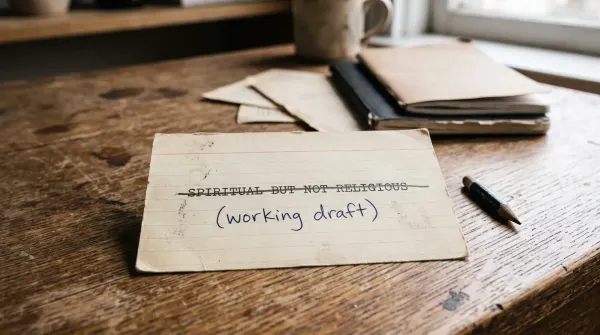
The Minimum Viable Spiritual Practice
I used to meditate for two hours. Now thirty minutes works better. More hours didn't equal more transformation. Consistency beats duration.

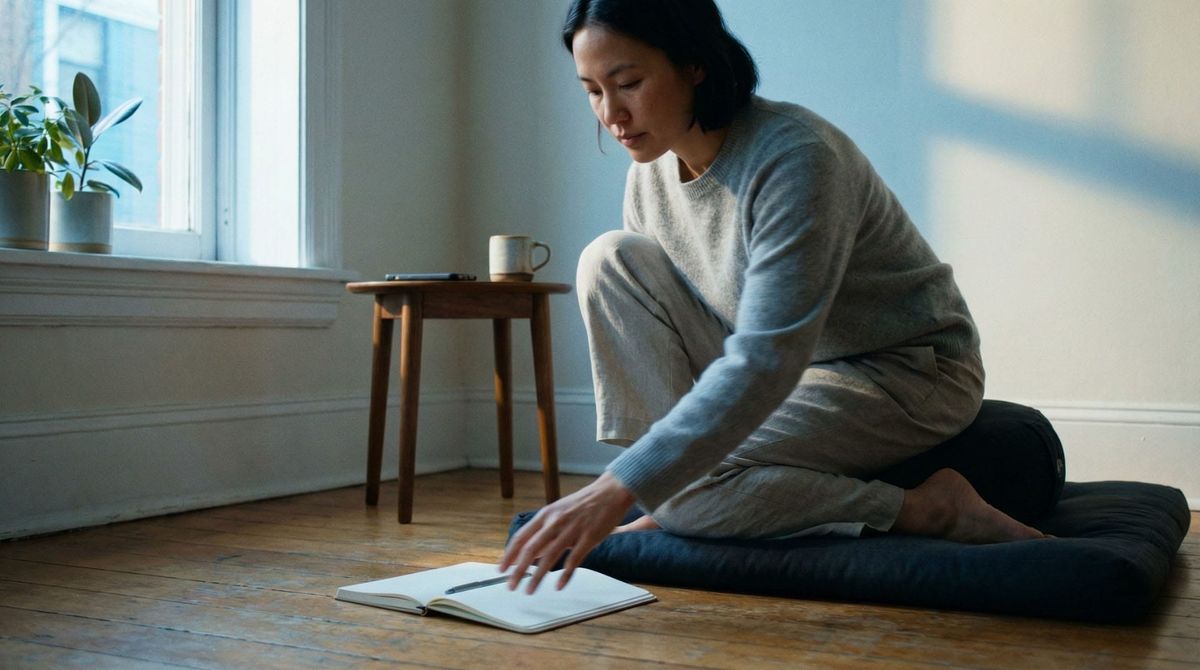
I used to meditate for two hours every day. Now I do thirty minutes.
This isn't a confession or a story about giving up. After twenty years of practice, I finally figured out what matters. And it turns out, a lot of what I was doing was noise.
What I kept - and what I do with the silence afterward - might surprise you.
The Myth of More
For years, I operated under an assumption so embedded I didn't even notice it was there: more meditation meant more growth. More hours on the cushion translated to more spiritual advancement, whatever that means.
In the community I was part of, there was an implicit hierarchy. People compared hours like investors comparing portfolios. Two hours a day? Good. Three hours? Better. Someone meditating four hours daily while working full-time? Basically enlightened. Probably also boring at parties, but nobody mentioned that part.
The math seemed obvious. More input, more output. Grind your way to transcendence. A thing it took me years to notice about spiritual organizations: the metrics obsession looks different from corporate life, but it's the same impulse wearing meditation beads.
Except it doesn't work like that.
I've met people with decades of practice who still react to criticism like teenagers who got their phone confiscated. I've watched meditators with impressive hours treat waiters with impatience that would embarrass anyone paying attention. And I've caught myself - thousands of hours deep - being just as petty, just as reactive, just as unaware as I was at year one.
"Time on the cushion delivers time, not transformation."
This is what twenty years of meditation actually taught me : the hours don't guarantee anything. Neuroscience lines up with what I learned the slow way - what seems to change the brain isn't logging marathon sessions, it's showing up regularly.1 The brain doesn't care about your impressive meditation hours; it cares about repetition.
What Sleep Taught Me About Practice
A reframe changed everything for me: meditation isn't something you make time for but something you give time to - like sleep.
Nobody says "I need to make time for sleep." You don't negotiate with sleep or treat it as optional when things get busy. You know what happens when you skip it: everything else degrades. Cognition. Mood. Decision-making. The ability to be a decent human being.
At some point, I stopped treating practice as an addition to life - something extra I fit in when conditions are right. Not a supplement, not self-care, not "me time," whatever that means.
It's maintenance. Non-negotiable maintenance for a system that doesn't function properly without it.
The shift sounds semantic, but it changed everything. When practice is optional, it competes with everything else. When it's maintenance, the real question isn't whether to do it, but how much the system needs.
And it turns out, the system needs less than I thought - but it needs it every single day.
The Actual Minimum
So what's left after stripping away everything that was noise?
Thirty minutes of sitting. My threshold, not a rule.
Some days it's an hour. Some days - the rare, luxurious ones - it stretches longer. But the floor is thirty minutes. Not because some teacher prescribed it, but because that's where I notice the difference. Below that, the day feels off - like I skipped a step somewhere and can't quite remember what. Above that, returns diminish rapidly.
Could someone else's minimum be different? Absolutely. That's the whole point. This is what I've found works. Not a prescription - after a long time of thinking more was always better.
But most people skip the part that matters most:
Immediately after meditation, I write.
Not always much. Sometimes a sentence. Sometimes pages. But the transition from cushion to notebook isn't optional - it's the second half of the practice.
The Meditation-to-Page Pipeline
There's something about the mind right after practice that took me years to understand. It's not calm, exactly. Not blank. Just clear, like water that's been allowed to settle.
During focused attention, the brain's wandering, self-referential chatter quiets down. Afterward, there's a window where thinking feels different. Cleaner. Problems I'd been circling for days suddenly have obvious solutions. Connections I couldn't see appear fully formed.2
That's what I discovered by accident: that window is extraordinarily useful for writing.
But none of it matters if you don't do something with it. The window closes fast. If I check my phone first, it's gone.
That's why the notebook sits next to where I sit. Not across the room. Not on my desk where I might decide to make coffee first. Right there.
Meditation alone didn't give me this. The combination did.
What I Do Now
The unsexy reality of my practice now:
Wake up. Don't check the phone. Not because I'm disciplined, but because I learned the hard way that the phone ruins the morning faster than anything else.
Sit. Thirty to forty minutes, sometimes more if nothing is pressing. No special room. No candles. No ambient sounds.
Pause. When I finish, I don't get up immediately. There's a moment there - between practice and day - that I've learned to protect. It's where the insights live.
Write. Sometimes it's about what surfaced during meditation. Sometimes it's whatever problem I went to bed unsolved. Sometimes it's nonsense that becomes useful three weeks later.
Stop. This is the part I resisted for years. No second session. No "bonus" practice in the afternoon. No compulsive accumulation of spiritual credit. I do the minimum that works, I do it every day, and I let that be enough.
The two-day rule applies here: I never miss two days in a row.3 One day off is life happening. Two days is a pattern forming. Three days is the practice dissolving.
The Accidental Benefits
Nobody told me, when I started, that the real changes wouldn't be spiritual at all. They'd be practical.
I'm less reactive. Not unreactive - I still get annoyed, still snap occasionally, still have moments where my response embarrasses my self-image. But there's a sliver of space between trigger and reaction now. Just enough to sometimes choose differently.
I procrastinate less. Something about sitting with discomfort for thirty minutes makes other discomfort easier to face. Writing the difficult email feels like less of an ordeal after you've already spent half an hour not running away from yourself.
None of this is guaranteed. None of it is universal. Not enlightenment or transcendence, just a slightly more functional operating system.
Is that less romantic than what the books promised? Sure. Is it more useful? In my experience, yes.
What This Isn't
I'm not saying meditation is the only path. Some people connect through movement, through nature, through art, through service. If you've tried it and it doesn't work for you, find another door .
I'm not saying thirty minutes is the universal minimum. Maybe yours is fifteen. Maybe it's an hour. The point is to find your actual threshold and protect that amount every day.
I'm not saying I've figured anything out. I'm fifty, I've been doing this a long time, and if someone asked me what enlightenment is, I'd shrug. What I know is what works for me, right now. Tomorrow that might change.
What I'm saying is simpler: after a long time treating practice as something to maximize, I finally learned it's something to integrate. Not special, not separate, just part of the day, like eating, like moving, like sleep.
The Non-Negotiable
I used to meditate for two hours because I thought I needed to become someone else. I was chasing some imagined version of myself - calmer, wiser, more evolved. Someone who had transcended the ordinary irritations of being human.
That person doesn't exist. And if he did, he'd be insufferable.
Now I sit for thirty minutes and then I write. Not to become someone else. Just to function as myself - the version of me that can think clearly, respond rather than react, and notice what's going on beneath all the noise.
That's it. What remains when everything unnecessary falls away.
Meditation. Writing. Every day.
Keep Exploring
If this resonated, you might also find value in:
- What Twenty Years of Meditation Taught Me — The longer view: what shifts after two decades, and what stays the same.
- A Meditation Practice for People Who Hate Meditation — If traditional practice feels impossible, start with the version that counts.
- Why Anger Matters — Why one emotion that gets excluded from "spiritual practice" is essential to it.
- When Meditation Isn't Working — What I got wrong about expectations for two decades, and what changed when I dropped them.
Your Actual Minimum
If you're exhausted by the pressure to do more - more hours, more techniques, more optimization - I'd ask one thing:
What's your actual minimum? Not the aspirational amount, and not what someone told you was necessary: the real threshold where you notice the difference between a day with practice and a day without.
Start there. Protect that. Let the rest go.
And if you've been avoiding practice entirely because the ask felt too big - try this: sit for ten minutes tomorrow morning. Don't check your phone first. Write something afterward, even one sentence.
See what happens.
The goal is functioning, not transcendence. Everything else is noise.
Notes From the Middle of the Path
Weekly essays on what actually sustains a practice - stripped of the performance and the optimization culture.
No optimization hacks. No spiritual bypassing. Just what survives honest examination.
Every Tuesday at 8 AM EST. One email. Unsubscribe anytime.
Already subscribed? Share this with someone drowning in productivity advice who might need permission to do less.
Notes & References
- Hölzel, B.K. et al. (2011) , "Mindfulness practice leads to increases in regional brain gray matter density." Psychiatry Research: Neuroimaging , 191(1), 36-43. ↩
- Brewer, J.A. et al. (2011) PNAS , Colzato, L.S. et al. (2012) Frontiers in Psychology ; Jha, A.P. et al. (2010) Emotion , multiple refs grouped. ↩
- Lally, P. et al. (2010) , "How are habits formed." European Journal of Social Psychology , 40(6), 998-1009. ↩
Frequently asked questions
How long should I meditate?
Thirty minutes is what works for me, after twenty years of testing different durations. There's no universal number. The right amount is the threshold where you notice the difference between a day with practice and a day without. For some people that's fifteen minutes. For others, closer to an hour.
Find yours by holding a duration consistently for two weeks, then testing ten minutes shorter or longer. Pay attention to how the day around the practice feels, not how the practice itself feels. The cushion is the easy part. What happens at 3pm when somebody cuts you off in traffic is the actual data.
Once you locate your floor, protect it daily and stop optimizing. Most people lose more practice to hunting the perfect duration than to skipping sessions.
Is meditating for hours better than meditating for minutes?
No, and the neuroscience backs this up. Brain changes from meditation come from repetition and consistency, not from logging marathon sessions. I spent years adding hours, comparing my totals to other practitioners like investors comparing portfolios, and ended up only marginally less reactive than people sitting twenty minutes daily.
The metric that predicts change is how many days in a row you've shown up, not how long you sat on any given day. Two hours once a week does almost nothing for sustained change. The same person sitting twenty minutes every day will get most of what they were chasing with the marathon sessions, plus a life that doesn't have to be reorganized around practice.
Time on the cushion delivers time on the cushion. What it delivers beyond that depends on consistency and what you do with the window right after.
What's the most important part of a daily meditation routine?
What you do in the ten minutes after meditation matters more than the meditation itself, for most people. Almost everyone skips this part. They sit, they finish, they pick up the phone, and the window closes before anything useful gets out of it.
After focused attention, the brain's wandering chatter quiets down for a while. Problems you'd been circling for days suddenly have obvious answers. Connections you couldn't see appear fully formed. That clarity has a shelf life of about ten or fifteen minutes, and it dies the second you start scrolling.
The actual structure of a daily practice has two parts: the sitting that lets the water settle, then the writing or thinking that captures what's now visible at the bottom of the glass. My notebook sits next to where I sit, not across the room and not on my desk where I might decide to make coffee first. If you can only protect one habit alongside meditation, protect that one.
Can you really change with just 30 minutes a day?
Yes, but probably not in the way you're hoping. Thirty minutes a day won't make you enlightened, transcendent, or even particularly serene in difficult conversations. What it gives you, after enough months of consistency, is a small but real space between a trigger and your reaction. Just enough to sometimes choose differently.
You'll procrastinate less, because sitting with discomfort for thirty minutes makes other discomfort easier to face. You'll notice things you used to miss: somebody's tone shifting, your own irritation rising, the exact moment you stopped listening. You'll be slightly less compulsive about your phone, because half an hour without it stops feeling like withdrawal.
That's the actual prize: a system that runs better. You're still the same person, with the same patterns and the same ridiculous habits. They just hit you slightly later and slightly softer than before. Thirty minutes a day buys you back about fifteen seconds of sanity at a time, several times a day. That turns out to be a lot. The mystical promise of meditation is mostly marketing. What you get is something that survives a regular Tuesday.
Is 10 minutes of meditation enough?
Ten minutes of meditation done every day is dramatically better than thirty minutes done three times a week. For most beginners, ten is more than enough to start noticing changes after about six to eight weeks of consistency. The benefits come from repetition, not duration.
That said, ten minutes might not be your steady-state floor forever. If you've been at ten minutes for several months and your day still feels off whether you sit or skip, you've probably hit the threshold where ten isn't doing the work anymore. Add five minutes and run the same experiment for another month.
The trap is going the other direction: people read about advanced meditators sitting for an hour and decide they need to be there too. Ten consistent minutes will do more for you than the hour you'll quit by week three because your life can't absorb it.
How long does it take to see results from meditation?
Most people notice subtle shifts after four to eight weeks of daily practice. Bigger changes, like being meaningfully less reactive in difficult conversations or less driven by impulse, take six to twelve months. Real reorganization of how you respond to life takes years, not weeks.
The early signs are quiet and easy to miss. You'll notice you slept better. A specific kind of irritation will arrive less often. You'll catch yourself before saying the thing you would have said two months ago. None of it feels mystical. It feels like the day got slightly lighter without anyone moving anything.
Meditation doesn't deliver milestones the way fitness or language learning does. There's no measurable bench press for inner life. The way you'll know it's working is that the people who live with you stop bracing when you walk in the room. That data takes a while to arrive, and you'll be the last to notice it.
Can you meditate too much?
Yes, in a few specific ways. First, you can meditate so much that your life starts to reorganize around the practice instead of the practice supporting your life. When skipping a session feels like a moral failure or an existential threat, the practice has stopped serving you and started running you.
Second, hours can become a substitute for changing. I spent years adding sessions, accumulating practice the way some people accumulate certifications, while the actual work of being less reactive sat untouched. The cushion was easier than confronting the patterns it was supposed to help me see.
Third, marathon sessions can produce false certainty. The deeper states are real, but they're temporary, and they often convince people they've understood things they haven't. The thirty-minute version stays closer to ordinary life, which is where any of this has to work.
All three failure modes have the same engine underneath: practice quietly becomes an ego project. The minimum that holds your day together is enough. More than that often turns out to be the same old self-improvement reflex wearing meditation clothes.
What's the best time of day to meditate?
Morning, before you've checked your phone. The first inputs of the day shape every decision until lunch, and giving the first thirty minutes to a feed designed to hijack attention guarantees you'll spend the rest of the day reacting instead of choosing.
I sit before doing anything else. I don't touch coffee until after the sit, or my phone until after the writing. The order matters more than people realize. Once you've absorbed thirty news headlines, four notifications, and a rage-bait comment from somebody you used to know in college, you can't undo that input by sitting on a cushion. The mind has already chosen its agenda.
Evening practice can work, but it's harder. By 7pm you've accumulated the day's emotional residue, and you're trying to settle water that's been stirred for fourteen hours. Some people find it useful as a reset. Most find it inconsistent because the day always conspires against it.
If you want consistency, sit early. The mornings are quiet because almost nobody else has decided to use them.