How to Keep a Practice You No Longer Believe In
When a belief dies, you're told to argue your way back in or leave. There's a third door: keep the practice, cut the claim. How to stay honest in the gap.
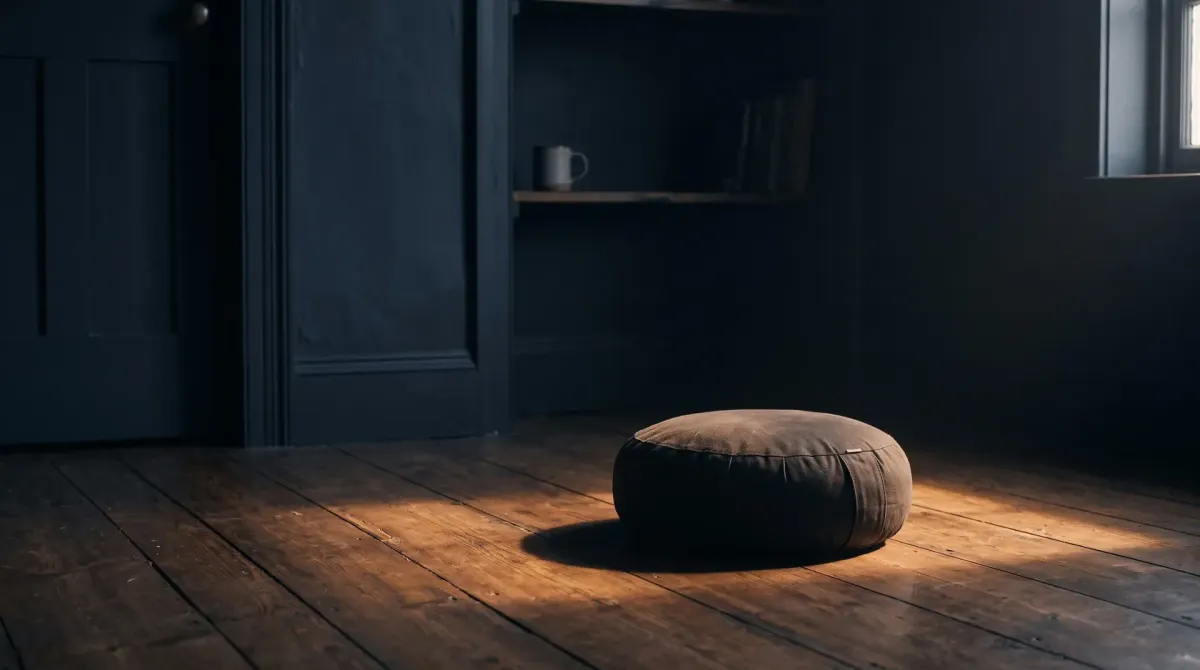
Most mornings I still sit. Twenty minutes, eyes closed, the same way I was taught most of a lifetime ago. What's different now is what's missing. The belief that used to sit there with me, the quiet certainty that something was happening on the far end of it, some current or grace doing its slow work, is simply gone. I noticed its absence the way you notice a clock has stopped, not by a sound but by a silence where a sound used to be. And then I did the strange thing. I kept sitting.
If you've ever kept doing something after you stopped believing the reason for it, you already know this is supposed to be a contradiction, and that you're meant to resolve it.
When a belief you've held for years finally dies, the world offers you two doors. Behind the first you find your way back in: you read the apologists, you decide the problem was your understanding rather than the claim, and you keep believing. Behind the second you leave, call the whole thing what it looks like from outside, and throw it out, practice and all. What I missed for years was that both doors rest on the same assumption: that the practice and the belief are a single object, so keeping one means keeping both, and dropping one means dropping both.
They were never a single object. Treating them as one is most of the trap.
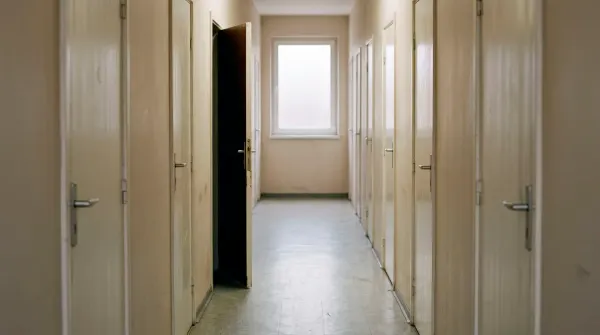
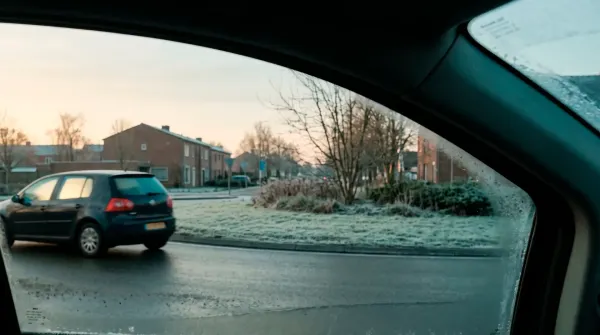
There's a third door, the one I never thought to look for. You keep the practice and cut the claim. You separate the thing you actually do, the sitting, the breathing, the showing up on a cold morning, from the story about why it works, whether you call it energy, grace, lineage, or mechanism. You keep the first and set down the second. This isn't a lukewarm compromise for people who can't commit to belief or exit. It's just a different cut: you take exactly the false part and leave the rest on the table, still working.
I couldn't do this for most of my life, and not because I lacked the nerve. I lacked the distinction. I assumed, the way nearly everyone does, that if the explanation was false the experience had to be worthless, that a practice resting on a wrong story was a wrong practice. That is the believer's logic exactly, with one sign flipped. The believer guards the practice because he holds the story true. The cynic tosses the practice because he's found the story false, never noticing he just ran the believer's own equation to get there. Neither of them has checked whether the experience ever depended on the story being true.
Often enough, it doesn't, and there's one unusually clean piece of evidence. In 2010 a team led by the Harvard researcher Ted Kaptchuk gave patients with irritable bowel syndrome a bottle of pills and told them plainly that the pills were placebos: inert, sugar, no drug in them at all.1 No trick. The patients knew. And the honest placebo still beat no treatment, by a clear and statistically significant margin, on symptom relief. The belief that the pill was medicine turned out to be optional; the effect came through the doing, the small ritual of taking something twice a day with attention, and it survived the patients being told the truth about it. A practice can keep delivering after you stop lying to yourself about why. Their study was a gut condition in a clinic, not two decades on a cushion; I'm borrowing the principle, not pretending they measured my mornings.
The clean version of this surgery is private. You set down the story, you keep your own practice, and no one needs to know. The hard version is when the practice is wired into a community, and the claim isn't only yours but the shared currency of everyone in the room, the thing that makes the room a room. Then cutting the claim means staying in body while you've quietly left in belief. You keep going. You keep the friendships built over years, the form, the familiar shape of a Sunday, the actual settling the practice still produces. And you've removed the one load-bearing belief everyone assumes you still carry. I've sat in a group while the people beside me were lit up by a certainty I no longer share, present, settled, glad to be there, and entirely unable to pretend the certainty back into myself. You're in the building. You're no longer in the faith. There's no word for that, which is part of why it's hard. It is surgery done with the patient awake and the room watching.
The reason almost nobody holds that position is that two easier exits are always within reach. One is to stay and perform the belief you've lost, keeping the claim on your lips to keep your place; that buys belonging by spending your honesty. The other is to leave and fling the practice into the same bin as the belief, because the exit feels cleaner if the whole thing was worthless; that keeps your honesty by throwing out something that was quietly doing you good. Both are the same move underneath, a way to stop the discomfort, and the third position is the one that refuses it. It asks you to hold, at once and without flinching, that the practice is real and its story is false. It's hard to keep two things like that in your hands at once; sooner or later you drop one just to stop the ache in your wrists.
I won't pretend the third door opens onto somewhere comfortable. It doesn't resolve; it has to be maintained. The claim grows back. You make the cut cleanly one winter and by spring you catch yourself half-believing again, or just missing how simple the believing was, the way the practice felt when a whole cosmology stood behind it instead of a sugar pill's worth of honest mechanism. So you cut again. You don't do this once and walk away healed. You keep weeding.
It's also lonely in a specific way, because it comes with no tribe. The believers, when they sense what you've done, file you under lost. The leavers, the ones who walked all the way out, file you under coward, too attached to admit the obvious and go. Both camps have company, a shared story, a Friday night. The person who kept the practice and dropped the claim has a chair in neither, and nobody is starting a club for him.
Here is the part I trust least in myself, so I'll say it plainly. "I'm clear-eyed enough not to believe and wise enough not to leave" is, by a comfortable margin, the most flattering story in this whole essay. It lets me feel superior to the faithful and superior to the apostates in the same breath, a connoisseur of a distinction they're both too crude to make. That sentence is exactly the sort of claim the surgery exists to remove, and it grows back faster than any of the others, because it's the one that congratulates me. The cleanest cut I have to keep making is on the surgeon. And the deciding stays mine to do, including the deciding about myself.
So I sit, most mornings, in the gap where a belief used to be. I keep what the practice actually does, which is real and small and has nothing to prove, and I keep scraping off the story that grows back over it, including the flattering one where the scraping makes me wise. The comfort of a side is the price of the third door, and most days it's a fair one.
Keep Exploring
If this resonated, you might also find these useful:
- I Believed in Chi Twice — the same cut made on one specific claim, on the mat and on the cushion.
- How I Left a Spiritual Community Without Becoming Bitter — the other honest door, for when staying isn't the right call.
- What Seven Years in a Spiritual Organization Taught Me — where I first learned that belonging and clear sight can come apart.
Most of what a practice gives you comes from the doing, not the story on the label.
I write about practice without the mythology, and about how to keep the parts that actually work. Separating a practice from its label is most of the work, and hardest when the label is a person. 7 Questions Before Following Any Teacher, free, and one essay most Tuesdays.
One email a week. Unsubscribe anytime.
Already subscribed? Send it to someone stuck choosing between believing all of it and throwing all of it out.
Notes & References
- Kaptchuk, T. J., et al. (2010) — "Placebos without Deception: A Randomized Controlled Trial in Irritable Bowel Syndrome." PLoS ONE, 5(12): e15591. Patients explicitly told the pills were inert still improved significantly versus no treatment. The finding concerns IBS in a clinical trial; its extension to contemplative practice here is by analogy. ↩
Frequently asked questions
Can you keep a spiritual practice after you stop believing in it?
Yes. The practice and the belief about why it works are two separate things. You can keep the first and set down the second: keep the practice, cut the claim. The experience never depended on the story being true.
What's the difference between the practice and the belief?
The practice is what you actually do, the sitting, the breathing, the showing up. The belief is the story attached to it, the energy or grace or mechanism that's supposed to make it work. They feel like one object. They aren't.
Does a practice still work if you don't believe the explanation?
Often, yes. Open-label placebo studies show that effects can survive even when people are told plainly there's no active ingredient. The benefit comes through the doing, not through believing the story about the doing.
How do you stay in a religious or spiritual community without believing its claims?
You stay in body while you've left in belief: keep the friendships, the form, the practice itself, and quietly drop the metaphysics. The trick is refusing both easy exits, faking belief to keep your place (the impostor) and storming out and trashing the practice too (the apostate).
Isn't keeping a practice you don't believe in just hypocrisy?
Hypocrisy is performing a belief you don't hold. Keeping a practice while being honest that you no longer believe its claim is the opposite: it's dropping the pretense and keeping only the part that's real.
What's the cost of this "third door"?
It doesn't resolve. The claim grows back, so it's maintenance rather than a one-time decision. It's lonely, because it belongs to no camp. And it breeds its own flattering story ("too clear-eyed to believe, too wise to leave") that has to be cut along with the rest.