
When the Messenger Ruins the Message
I closed a YouTube video in one second because someone looked old and tired. Years earlier, a TV crew dismissed us in one second because we looked young and naive. Different judgments, same mechanism—and I've been on both sides.

I was looking for something I'd written - a line about giving people space to misunderstand you - and ended up on YouTube watching a spiritual reel instead.
You know the kind. Beach at sunset, water perfectly calm, warm light filtering through clouds. Text overlaid on the scene: profound wisdom about boundaries, acceptance, letting go. Ambient music that makes you feel like maybe this time you'll finally understand the thing you've been trying to understand for years.
The production was flawless. Soft focus. Warm tones. The aesthetic whispered: this person has figured something out.
I watched the thirty-second loop. The words were good - actually good. The kind of thing I'd probably agree with if I'd read it in a book. But right at the end, the camera rotated to show who'd created it.
And in one second, everything changed.
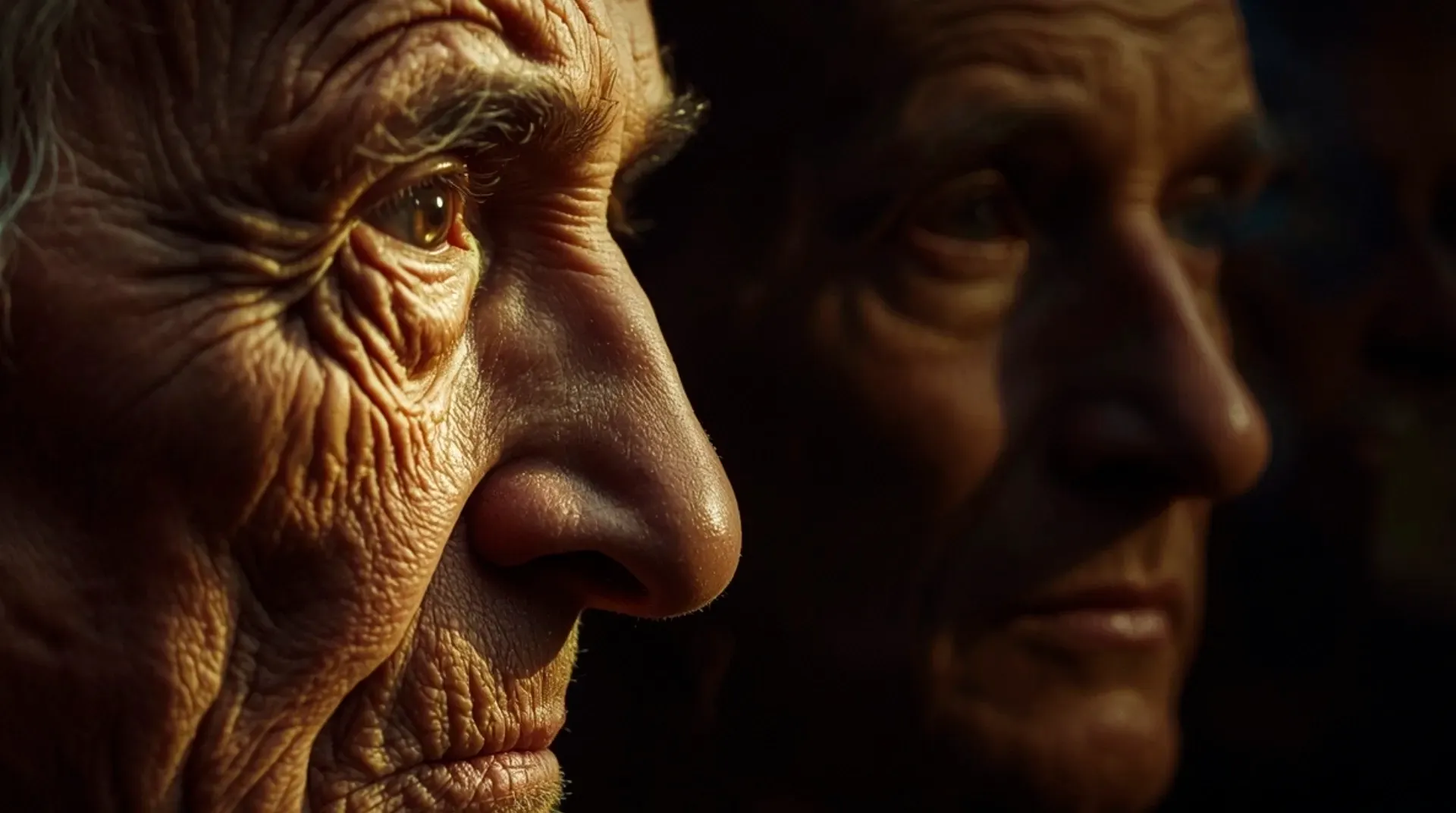
Here's what I saw: a face with deep wrinkles, tired eyes, skin that had seen decades of weather. Not the serene, ageless presence I'd unconsciously expected. Not the glowing vitality that spiritual content usually packages. Just a person who looked old. And exhausted. And - my brain supplied this word before I could stop it - defeated.
My first thought, unfiltered: You don't look like someone who's figured anything out.
My second thought, half a second later: So much compassion, Soren. Truly enlightened of you.
I closed the video. Not because the message was wrong. Because I'd just discovered something ugly about myself: I expect wisdom to look a certain way. And when it doesn't, I dismiss it in one second flat.
The Face Enlightenment Is Supposed to Wear
Here's the thing nobody talks about in spiritual spaces: we have a mental image of what wisdom should look like.
Serene. Calm. A face that radiates peace - not one that shows the wear of having fought for it. Skin that glows, eyes that sparkle, the visual language of "having transcended suffering" rather than "having survived it."
Scroll through any spiritual content platform. The teachers who get millions of views share certain characteristics: they look healthy, rested, often younger than their years. Their faces suggest that enlightenment has preserved them somehow - that inner peace has translated into outer smoothness.
And then there's the face I saw in that reel. Wrinkled. Tired. The face of someone who looked like they'd been through some shit.
Which, if you think about it for half a second, is exactly the face you'd expect from someone with genuine wisdom to share about boundaries and acceptance. You don't learn about letting go from a life where nothing was hard to hold. You learn it from loss. From struggle. From years that leave marks.
The Lookism We Don't Admit
Let me say the uncomfortable thing directly: spirituality has a lookism problem.
We don't talk about it because it sounds shallow. We're supposed to be beyond appearances. We meditate on impermanence, discuss non-attachment to the body, quote teachings about the illusory nature of physical form. And then we scroll past the teacher with wrinkles and click on the one who looks like a yoga advertisement.
I'm not pointing fingers. I'm describing what I did. What I do. What I catch myself doing and still can't fully stop.
The message in that reel was about acceptance - about making peace with what is. And I rejected it because the messenger's face showed too much evidence of what was. The wrinkles, the tiredness, the visible age - they were proof that this person had lived through things worth accepting. And my brain read that proof as disqualification rather than credential.
"We've built an entire visual language around enlightenment - and it looks suspiciously like good genetics and a skincare routine."
A tired face, a face marked by years - it reminds us that the path doesn't necessarily fix things. That you can meditate for decades and still look exhausted. That you can achieve genuine wisdom and still have a face that shows the cost of getting there.
We want spiritual practice to be transformative in visible ways. We want the "after" photo to look better than the "before." We want evidence that the work works - and we've decided that evidence should show up in the face.
A teacher who looks young and rested lets us believe the destination is worth the journey. A teacher who looks old and tired makes us wonder if maybe the journey just... wears you down.
How's that for spiritual depth?
I've Been Both People
Here's the part I'd rather not write.
I've been the person dismissing teachers because their faces didn't match my mental image of wisdom. And I've been the messenger who got dismissed for the exact same reason.
But before I was the one watching YouTube reels with my thumb on the close button, I was the one being watched.
Twenty-some years ago, I was a volunteer in a meditation organization. Mid-twenties, earnest, convinced we had something valuable to share. The teacher encouraged us to represent the practice publicly - talks, events, outreach. We weren't ugly or strange-looking, but we weren't... polished. We had what I'd now call "a very simple public interface." Ordinary faces. No charisma training. No media presence. Just people who meditated and believed it mattered.
Then a TV crew showed up.
Someone had heard about our group and wanted to do a segment. The teacher gathered us, said this was it - the moment that would spread the message to thousands. We prepared like it was the most important thing we'd ever done. Rehearsed what we'd say. Believed, genuinely believed, that if people just heard what we were offering, they'd understand.
The interview happened. We gave everything we had.
And then we waited. The segment was scheduled to air in two weeks. We gathered to watch it together - twenty of us in someone's living room, excited, nervous, ready to see ourselves introducing the world to something real.
The segment opened. There we were on screen.
And within thirty seconds, I understood something I'd spend years fully processing: they had dismissed us before we'd finished our first sentence.
The editing. The music choice. The narrator's tone. Every production decision communicated the same thing: these people are not credible. We weren't presented as practitioners with something to offer. We were presented as curiosities. Slightly odd. The kind of people you watch with a mix of pity and amusement.
The content of what we'd said - the actual ideas, the practices, the experiences - none of it made it through. The camera had looked at us and decided in one second what we were. Everything after was just confirmation.
I sat in that living room, watching our faces on screen, and felt something I didn't have words for then: we were judged the moment they saw us.
Now, decades later, I understand it better. The truth was somewhere in the middle. The TV crew came looking for sensational content; when they didn't find it, they manufactured it. We weren't as credible as we thought - young, inexperienced, living in a bubble where everyone agreed with us. Both things were true. We had something real to offer and we didn't look like people worth listening to.
But here's what stayed with me: the judgment was instant. Before we'd explained anything. Before they'd tested a single idea. One look at our ordinary, unpolished faces, and the verdict was in.
Sound familiar?
I closed that YouTube video in one second because someone looked old and tired. A TV crew dismissed us in one second because we looked young and naive. Different judgments, same mechanism. The messenger's face overwrites the message before the message has a chance.
What I'm Trying to Unlearn
I don't have a framework for this. No steps to stop judging faces. Just a few things I'm trying to hold:
The face of someone who's genuinely struggled with acceptance might look like struggle, not like transcendence. The wrinkles might be the credential, not the disqualification.
When I catch myself dismissing someone based on how they look, I try to ask: Am I reacting to something real about their message, or am I uncomfortable because they don't match my visual template of what a teacher should be?
And I try to remember that living room. Twenty people watching ourselves be dismissed on television. The feeling of having something real to offer and watching it get erased by how we looked offering it.
Sometimes the gap between appearance and message is information - I've seen enough spiritual performers to know that. But sometimes my judgment is just lookism dressed up as discernment. And I can't always tell which is which in that one-second window before my brain decides.
The best I can do is notice. Name it: "I just dismissed this person because of their face." At least be honest about the bullshit my brain just pulled.
The Uncomfortable Truth
Here's what I'm left with: the messenger's face does affect how we receive the message. Not because it should. Not because it's fair. But because that's how human perception works.
I've been on both sides now. The one who judges in one second, and the one who gets judged. Neither feels good. Neither is fully fair. And knowing this doesn't make me stop doing it - it just makes me aware of the pattern while I repeat it.
I watched myself close that video. I watched myself sit in that living room, seeing our message get erased by how we looked delivering it.
Maybe the best I can do is stay in the discomfort. Keep noticing. Keep asking whether the face I'm rejecting might actually be the face of someone who's earned what they're teaching. Keep remembering that I've been both the judge and the judged, and neither version of me had it fully right.
"The messenger doesn't ruin the message when they admit they haven't fully arrived. The messenger ruins the message when they pretend it was free."
For You
If you've ever dismissed someone's wisdom because their face didn't match your mental image of enlightenment - join the club. I closed a video in one second because someone looked old and tired, fully aware I was being unfair, completely unable to stop myself.
And if you've ever been dismissed before you finished your first sentence - because you didn't look the part, because your face didn't match what credibility is supposed to look like - I've been there too. Sitting in a living room, watching myself get reduced to a curiosity, feeling the gap between what I had to offer and what they decided I was worth.
Both experiences live in me now. The judge and the judged. Neither one fully right.
I don't have a fix. Just a question I keep asking: What would it mean to trust wisdom that shows the cost of earning it? To see a tired face - or an ordinary face, or a young face, or any face that doesn't match the template - and stay long enough to hear what it's saying?
I'm still learning. Probably will be for a while.
But at least now I see what I'm doing. Even when I can't stop.
Continue Exploring
What Your Guru Forgot to Tell You - Most spiritual teachers say "verify everything" - but almost nobody actually does it. Here's why the gap between instruction and practice matters more than the teaching itself.
The Authenticity Trap - The moment you try to be authentic, are you still being authentic? The paradox of performing realness.
When the Face Doesn't Match the Teaching
Weekly essays on trusting wisdom that shows the cost of earning it, unlearning the visual language of enlightenment, and being honest when your outside doesn't match your message.
No serene faces. No effortless transcendence. Just what survives honest examination.
Every Tuesday at 8 AM EST. Share this with someone who's been on both sides—the one who judges and the one who gets judged.
Already subscribed?Share this with someone who might need to run the test."
Notes & References
¹ Hovland, C.I., & Weiss, W. (1951). "The influence of source credibility on communication effectiveness." Public Opinion Quarterly, 15(4), 635-650.